Before I begin, let it be known that nobody was massacred in the making of this blog, but I had to make it work for the title. Enjoy.
The croissant has become synonymous with France. However, the origins of this delectable crescent moon-shaped pastry are actually quite not French at all.
The most comparable ancestor to the modern croissant is likely the kipfel, a Viennan pastry dating back to the 13th century that was more dense than fluffy. The exact origins of this roll connected to the croissant are unknown as there are many different timeframes for the original legend involving the bakers of Vienna baking crescent shaped rolls in celebration of warding off the Ottoman invasion during either the 16th or 17th century. Regardless, this does not explain how it became a French delicacy as the country as a whole was unlikely to support a pastry gloating in the face of the Ottomans due to their 250 year alliance they had shared. Another theory suggests that Mary Antoinette was the first to introduce the croissant to French cuisine, but there is minimal, if any, historical evidence to back this claim up. Many historians believe the rightful introduction of the croissant came from a popular Viennese bakery located in Paris around 1838. Once the kipfel began to be made with puff pastry, the modern croissant was born.
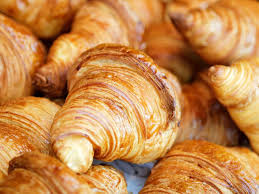
To be honest, I’m not sure anyone is truly worried about where the croissant came from and when. The pastry is simply too good to worry about anything other than the time you are going to consume one next. While all croissants are good, they are not all great. If there is one thing I have learned in France, it is that the croissant ordinaire has absolutely nothing on the true king of pastries, the croissant au beurre. This typically straight croissant is made with butter instead of margarine and it makes all the difference in the world. Having tried many croissants during my time here in Paris, I beg for you to pay the extra 25 cents to receive a true beauty of a pastry while in the heart of the country famous for them.

 Delicious France